Small Residential MVHR Design, Supply & Installation
Full MVHR design, supply and installation for individual homes, extensions and refurbishments.
Free site survey
We survey your property before quoting, so the design accounts for your specific layout and constraints.
Bespoke duct design
Routes are planned around your home's joists, ceiling heights and finishes rather than a generic layout.
Discreet installation
Grille positions and unit placement are agreed with you up front to keep ductwork out of sight.
Minimal disruption
Work is sequenced to fit around your build or refurbishment programme wherever possible.
Full Part F compliance
Every system is commissioned and tested to meet Building Regulations Part F ventilation requirements.
Aftercare included
We provide commissioning documentation and guidance on filter changes and routine maintenance.
What is MVHR?
MVHR systems continuously extract moist, stale air from kitchens and bathrooms and supply fresh, filtered air to bedrooms and living rooms, passing the outgoing air through a heat exchanger first so most of its warmth isn’t lost. The result is better indoor air quality and lower heating demand than relying on trickle vents and extractor fans alone.
Our process
We start with a free site survey to understand your property’s layout, ceiling voids and finishes before producing a design. Once agreed, ductwork is installed at first fix, the unit and controls go in at second fix, and the system is commissioned and tested before handover, with full documentation provided for Building Regulations sign-off.
Why choose MVHR for a single home in London?
Persistent condensation, musty odours, and poor airflow are common signs that a home needs a better ventilation strategy. Mechanical Ventilation with Heat Recovery (MVHR) addresses these issues by continuously replacing stale indoor air with filtered fresh air, while recovering most of the heat from the outgoing airstream.
For homeowners across London and Greater London, a well-designed residential MVHR system can:
- Improve indoor air quality by removing moisture, pollutants, and odours from wet rooms
- Reduce the risk of condensation and mould in well-insulated, airtight properties
- Deliver year-round comfort with pre-warmed fresh air in winter and steady ventilation in summer
- Lower heating demand compared with uncontrolled ventilation through trickle vents and extractor fans alone
- Operate quietly when duct routes, unit placement, and acoustic treatment are planned correctly
- Meet Building Regulations Part F requirements when commissioned and documented properly
Whether you are building a new home, extending, or retrofitting an existing property, our team designs systems around your layout, not a generic template.
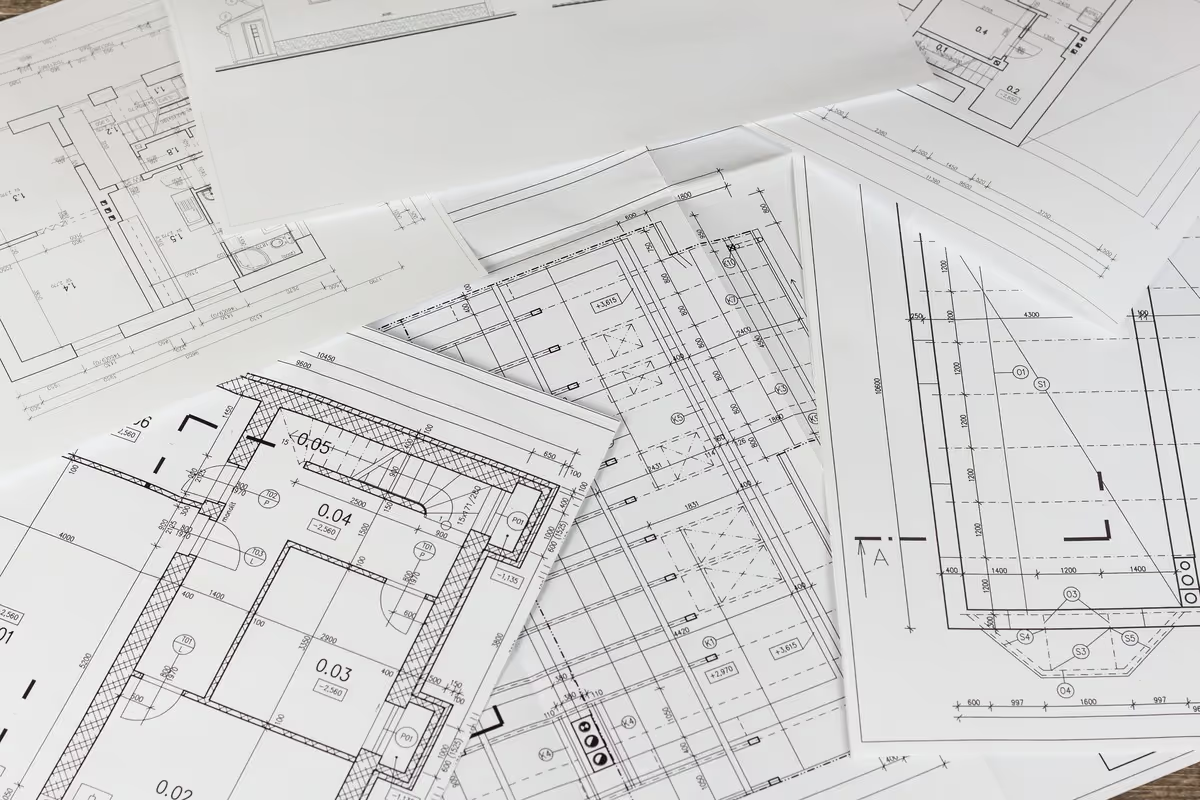
Design stage: how we plan your residential MVHR system
Every small residential project begins with a free home survey. We assess room layout, occupancy, existing ventilation, insulation levels, and areas prone to damp or poor airflow before recommending a system.
Our design process typically covers:
- Property size, ceiling voids, and structural constraints that affect duct routing
- Wet-room extraction requirements and supply-air distribution to living spaces and bedrooms
- Insulation and airtightness: MVHR performs best where heat recovery can be maximised
- CAD-based duct layouts so component positions are agreed before first fix
- One or more MVHR units sized for the dwelling, depending on floor area and zoning needs
If you already have a ventilation design from your architect or M&E consultant, we can work from that package. Where a design credit applies, it is reflected in your quotation. Our installed price covers supply, installation, commissioning, and certification.
Material supply: British-manufactured ventilation components
We supply ventilation equipment and ancillaries selected for durability, airflow performance, and long-term serviceability. Typical residential packages include:
- MVHR units: British-manufactured heat recovery ventilators sized for single-dwelling applications
- Plenum systems: for even air distribution at branch points
- Fan coil units: where temperature control and air circulation are required
- Semi-rigid and spiral ductwork: routed to minimise pressure loss and noise
- Linear grilles: discreet supply and extract terminals that suit modern interiors
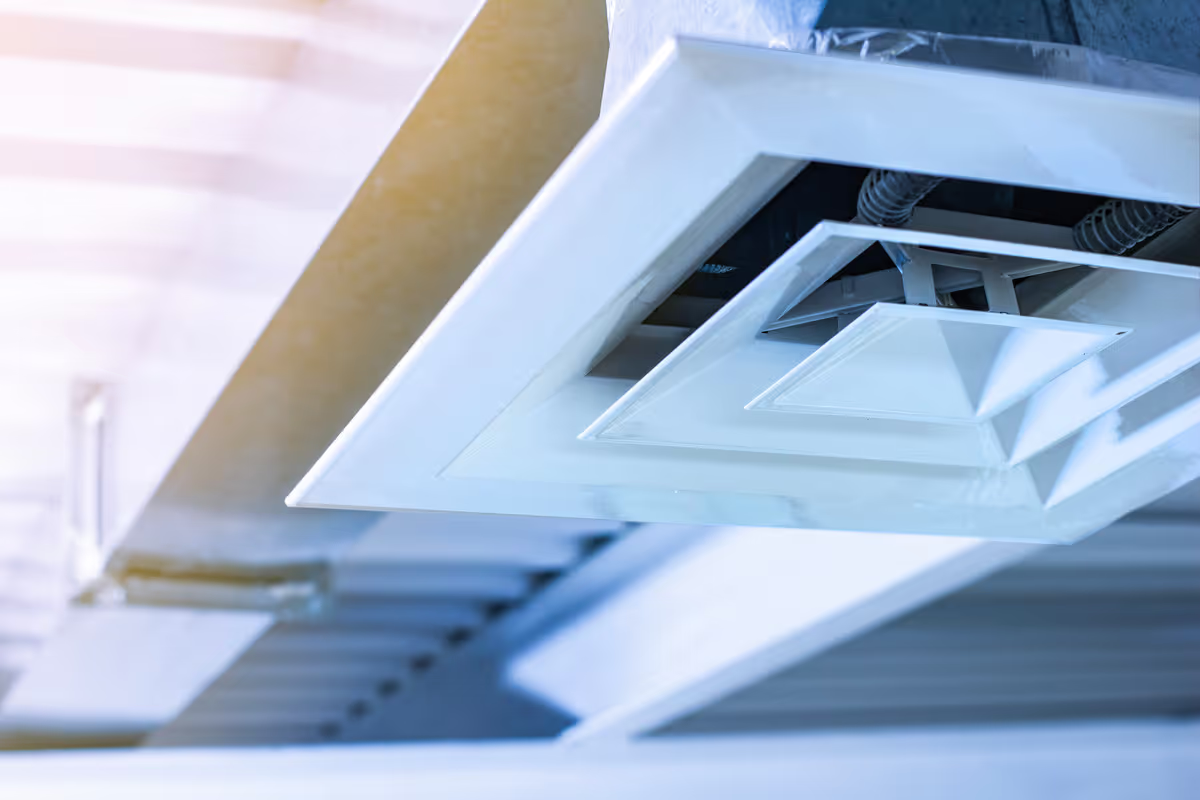
Installation: what happens on site
Residential MVHR installation is usually coordinated in two stages:
First fix: ductwork and infrastructure
- MVHR unit positioned in a loft, plant room, or utility space with maintenance access
- Semi-rigid duct network installed to wet rooms (extract) and habitable rooms (supply)
- Duct routes balanced to maintain even airflow and low system resistance
- Fan coil connections and control wiring prepared where specified
Second fix: terminals, controls, and commissioning
- Linear grilles and terminals fitted in agreed ceiling or wall positions
- User controls located for practical day-to-day operation
- System balanced, tested, and commissioned to design airflow rates
- Handover documentation provided for Building Regulations sign-off
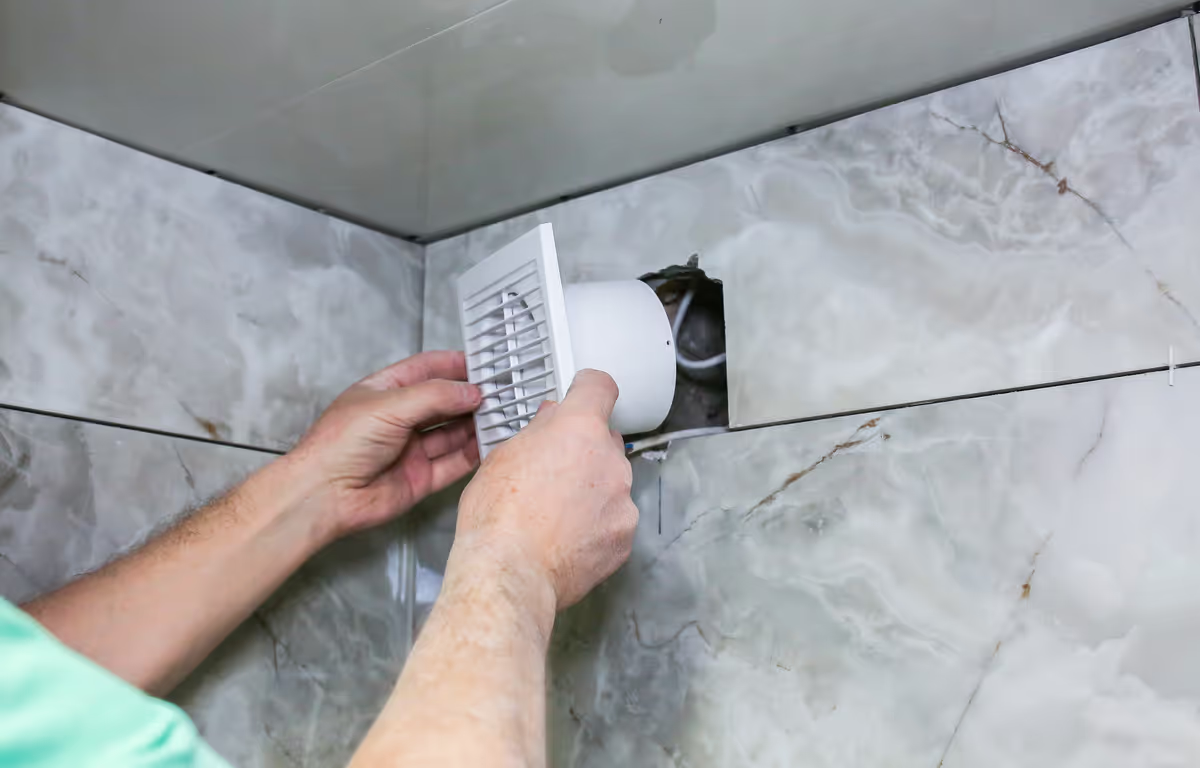
Commissioning and aftercare for residential MVHR
Commissioning confirms that your MVHR system delivers the intended airflow, operates efficiently, and complies with Part F. Our handover includes filter guidance, control instructions, and recommendations for routine maintenance.
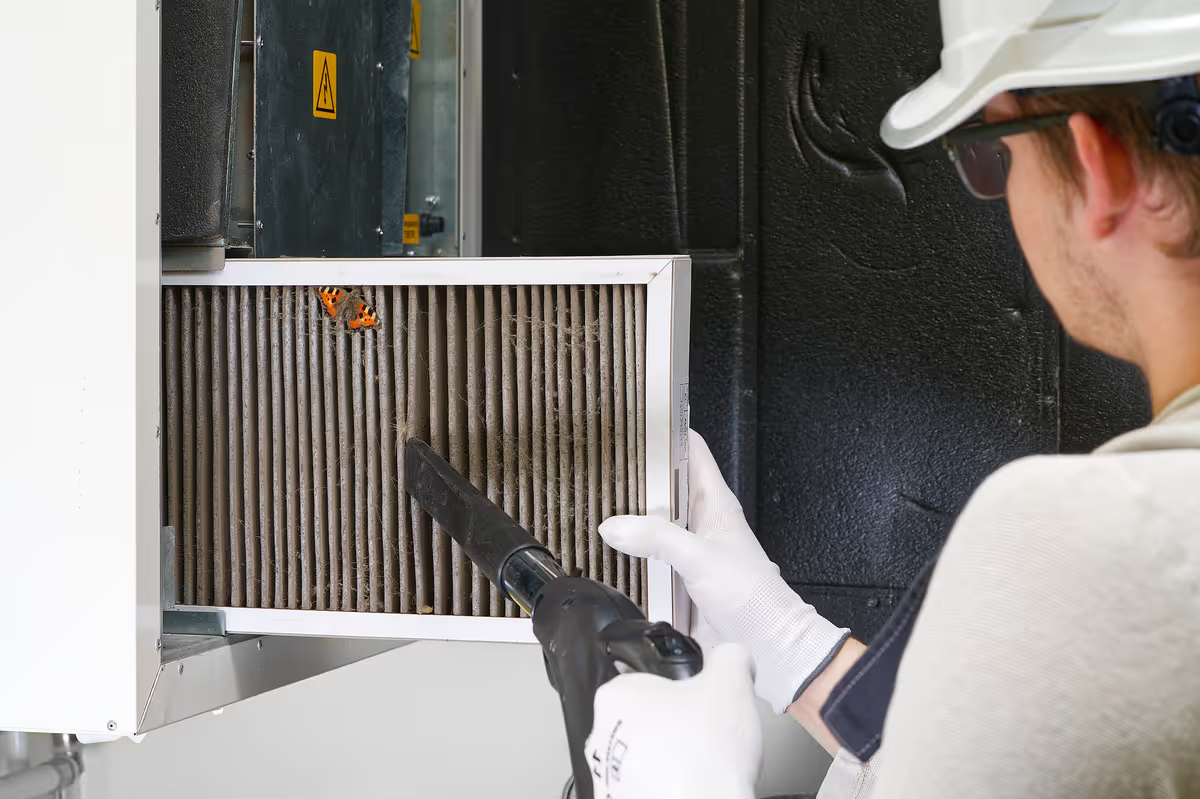
Ongoing care is straightforward: filter changes at manufacturer intervals, periodic visual checks, and professional servicing to protect efficiency and equipment life. See our MVHR commissioning and servicing service or book a service visit if your system is already installed.
FAQs
What is MVHR?+
MVHR (Mechanical Ventilation with Heat Recovery) is a whole-house ventilation system that extracts stale, moist air from wet rooms and supplies fresh, filtered air to living spaces, recovering heat from the outgoing air in the process.
How long does a small residential installation take?+
Most single-home installations take between one and three weeks on site, depending on property size and whether work is coordinated with a wider refurbishment or build programme.